
Two-Player Four in a Row
Pass and Play
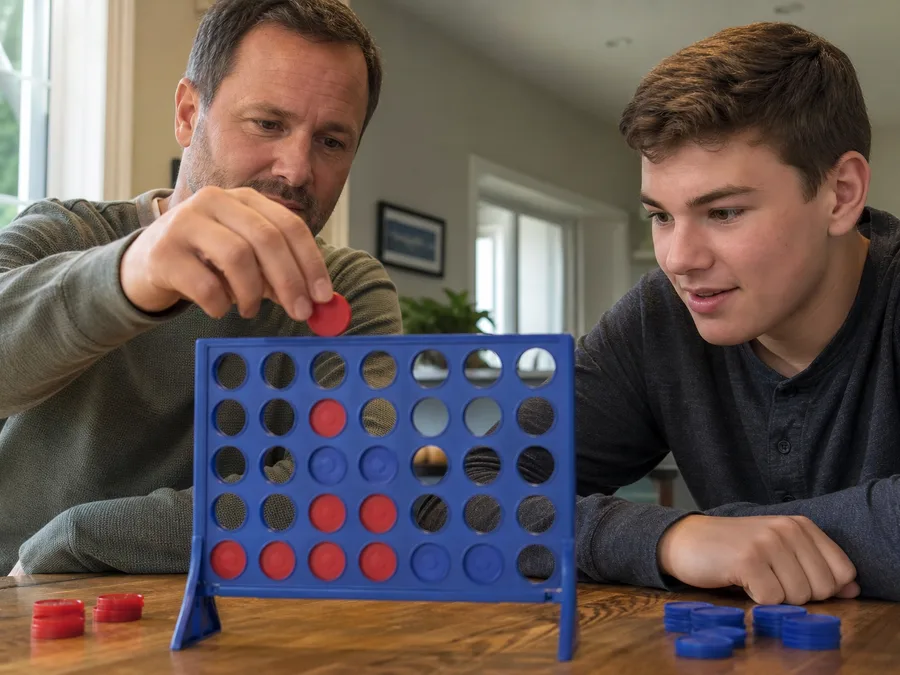
Two people at the same table do not need a room. Open the board and play: red drops first, blue follows. Before you begin, settle who plays red, whether a landed disc can be undone, and who confirms a column has been handed over. Adjacent columns are easy to tap by mistake on a small screen, so it helps to call the column number before the drop.
Getting Started
Lay the device between you and leave it there. Whoever is to move taps one column; the turn ends when the disc lands.
New players should drop twice in the same column first, so they see the second disc stack on the first. Then cover full columns, four in a line, and the draw on a filled board.
When you review, walk the move list backward: a missed three, the drop that made two threats, or a center column given away too early. Undo from that point and try again.

Pass the Screen
Check the status bar before you tap so you know which color is to move. After a column is chosen, the disc occupies the lowest open slot and the turn is over, so hand the device across. A second tap in the same column is a new move, not a continuation. Once four are connected or the board is full, the board stops taking drops.
Full Columns
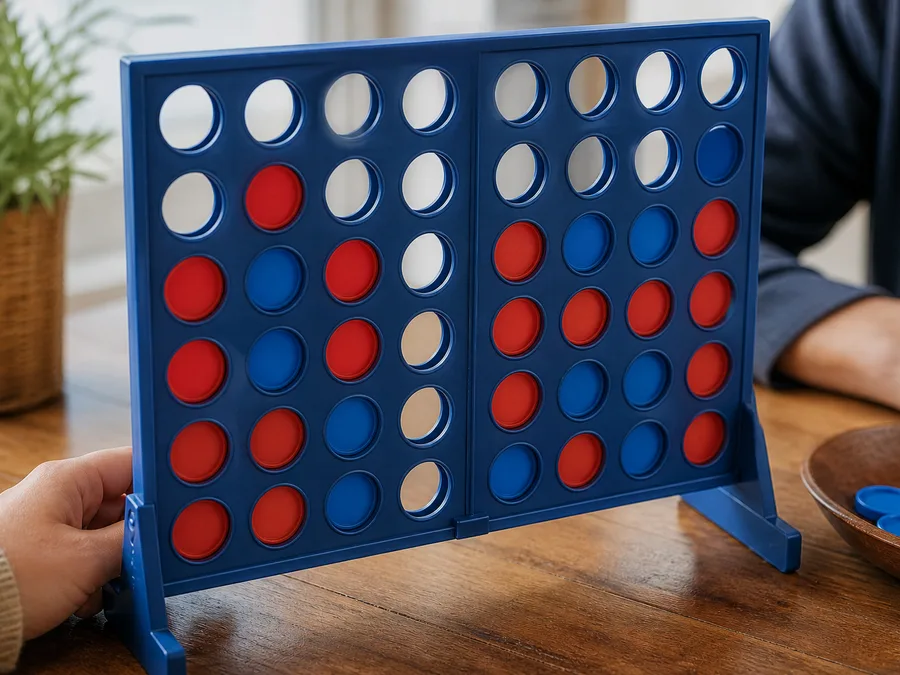
Columns fill from the bottom. When a column reaches the top, another tap there does nothing. Disputes usually come from tapping a neighboring column by accident, or from believing a disc can stop midway up. The board is the referee: a disc only ever occupies the lowest open slot, and the recorded column is the move.
Swap Red Each Game
Red always starts, so a fair match is two games: A plays red, then B plays red. If the score is still tied, play another full pair. Agree on undo before the first game: casual play can rewind, while scored play can freeze a landed disc. The move list stores each column; replay that move instead of reconstructing the board from memory.
2players
1shared device
Redstarts every game
2 gamesto swap who sits red
